Our History
The story of Swaledale cheese stretches back almost a thousand years. Our artisan cheesemaking heritage can be traced to the 11th century, when Cistercian monks are believed to have developed the original recipe using ewe’s milk. They passed their knowledge and techniques to local farmers in Swaledale, establishing a tradition of cheesemaking that would endure for generations.
Over the centuries, the recipe and methods were carefully handed down from one generation to the next. As farming evolved, so too did the cheeses of Swaledale, with production expanding to include cow’s and goat’s milk alongside the original ewe’s milk cheeses.
By the late 20th century, traditional cheesemaking in Swaledale had sadly declined, and by 1980 only one farm remained in production. When Longstaff Farm ceased making cheese, Mrs Marjorie Longstaff entrusted the original Swaledale cheesemaking process to the founders of The Swaledale Cheese Company. Determined to preserve this unique regional craft, they revived production in 1987 using the same time-honoured methods.
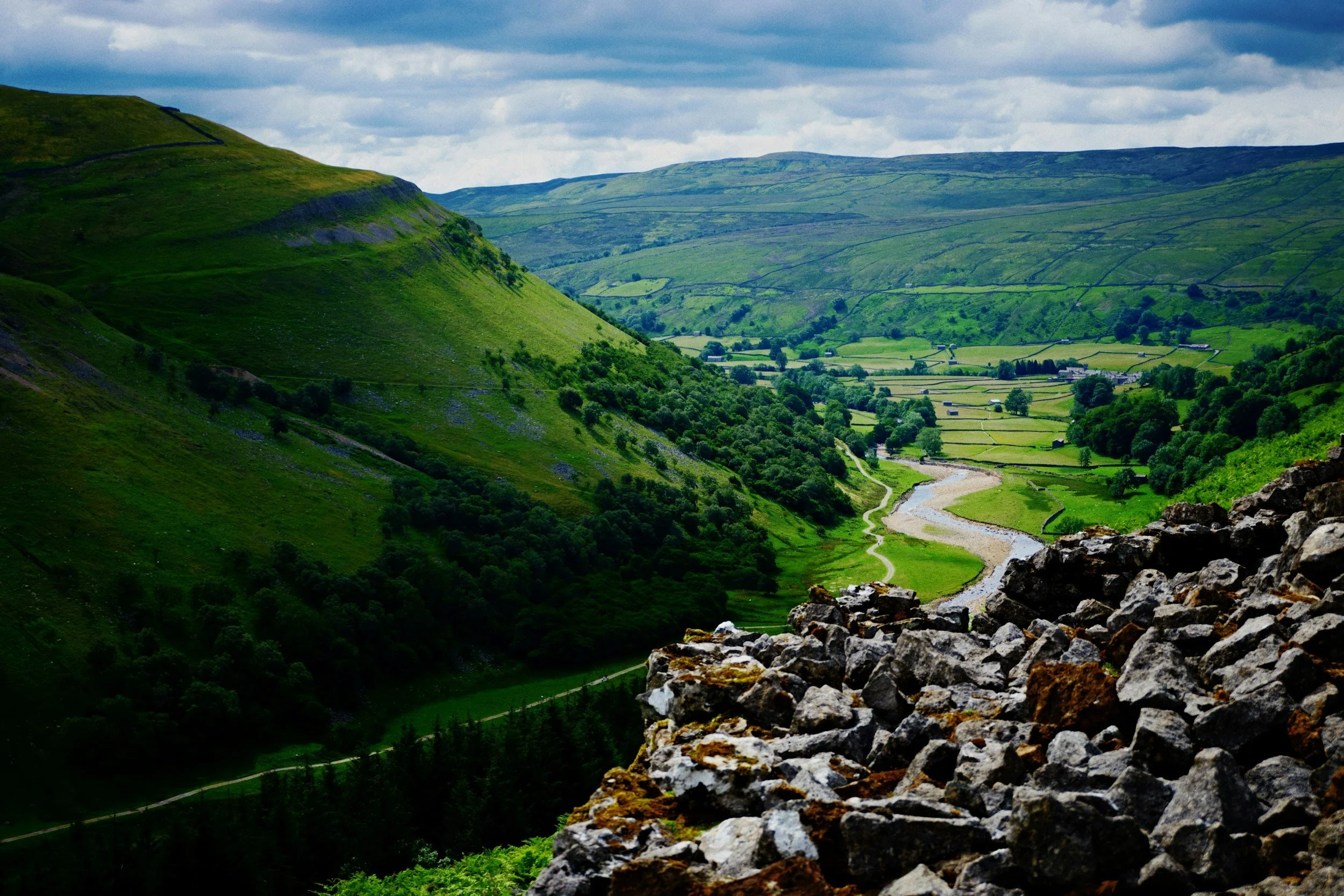
Today, we remain proud custodians of this remarkable heritage, continuing to produce authentic artisan cheeses rooted in centuries of tradition and the landscape of the Yorkshire Dales.
The Cheese Making Process
Our cheesemaking begins with the delivery of locally sourced milk, brought to us fresh on the morning of production. The milk is gently pasteurised to ensure quality and safety, before being transferred to the cheesemaking vat where the transformation begins.
Cultures, rennet and carefully selected ingredients are then added to the milk to start the curdling process. As the milk coagulates, the curds (the solid elements) naturally separate from the whey (the liquid), allowing the proteins to develop and form the structure of the cheese. Once the curd has set and rested, it is cut into small pieces, enabling it to sink and release more whey.
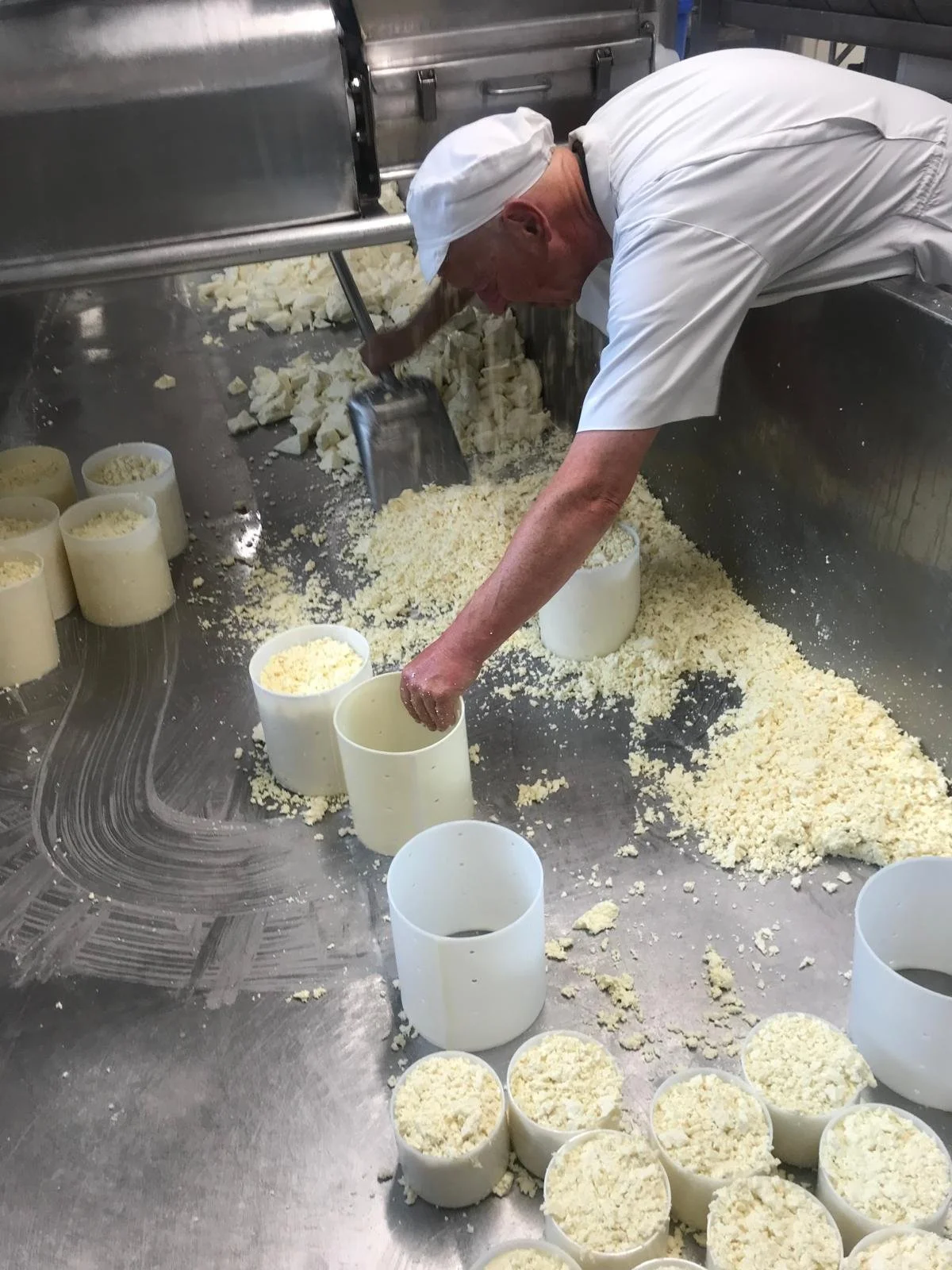
The whey is then drained away, leaving the curd to settle and continue releasing any remaining liquid. The curd is gently broken into smaller pieces and carefully transferred into moulds. Each mould is then filled and pressed with weights to shape and form the cheeses.
Once formed, the cheeses are moved to our ripening rooms where they are matured for varying lengths of time, depending on the variety being produced. Here, under carefully controlled conditions, each cheese develops its own unique texture, character and depth of flavour — the final stage in a traditional process that honours centuries of Swaledale cheesemaking heritage.